
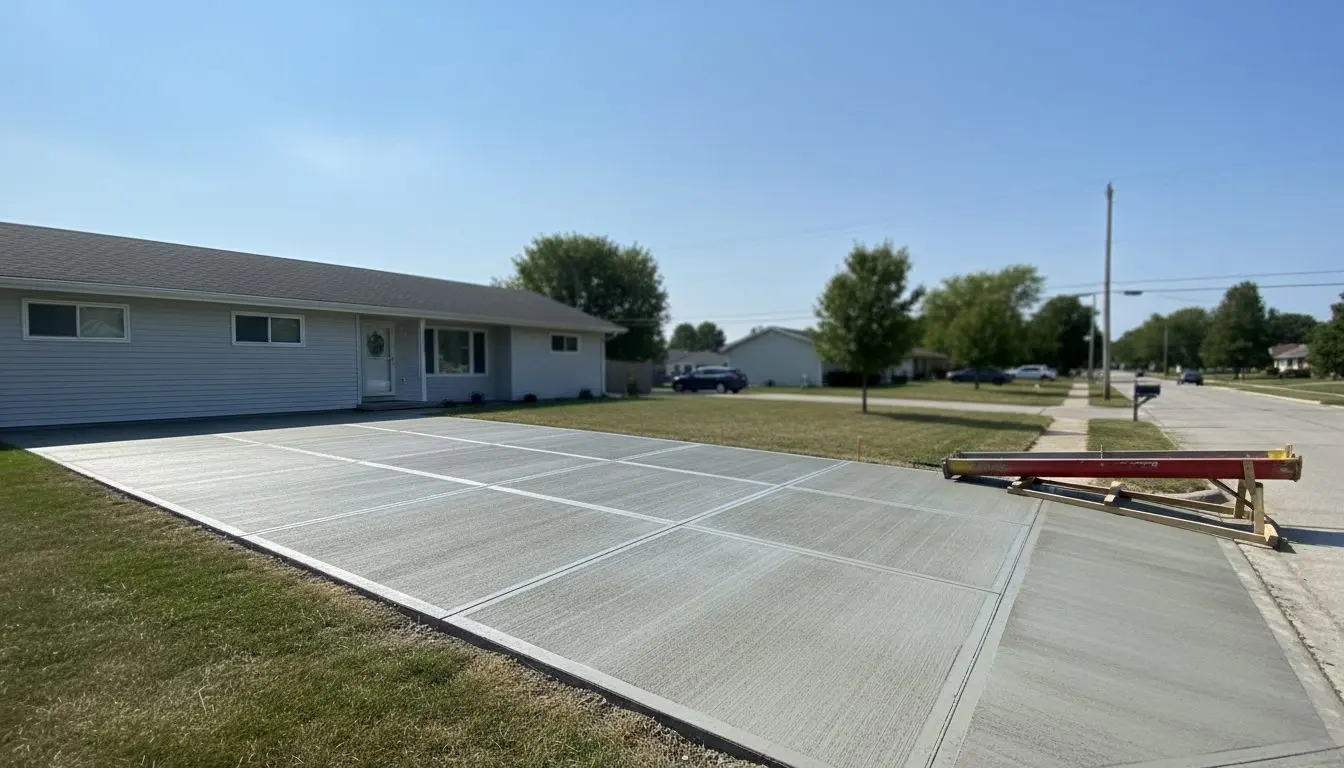
Driveways and Parking in Bloomington
Concrete Driveways and Parking Pads
Poured on a base built for clay that heaves, timed around the pour window before a cold snap closes it, and cut with joints that control where the slab cracks.
A driveway built to hold what parks on it
A driveway that carries your trucks and trailers without cracking at the joints by the first hard winter.
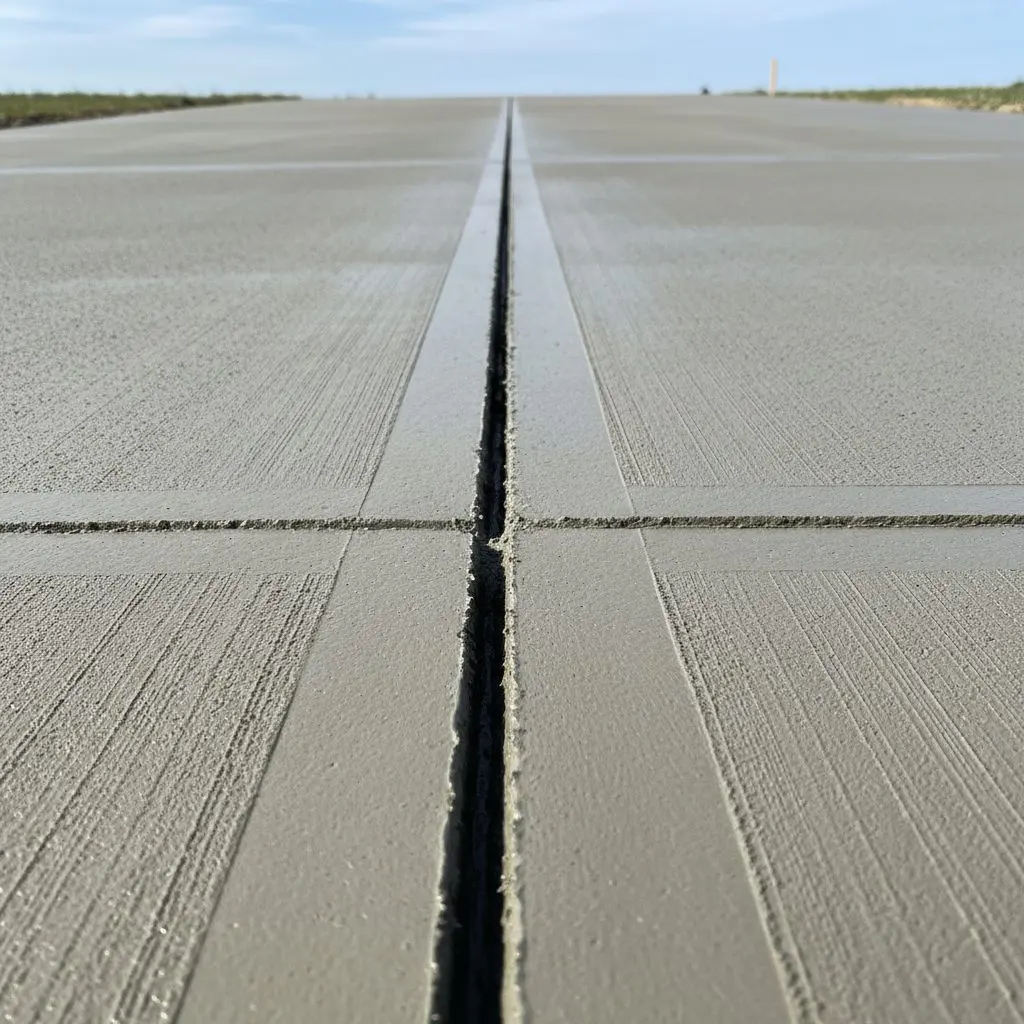
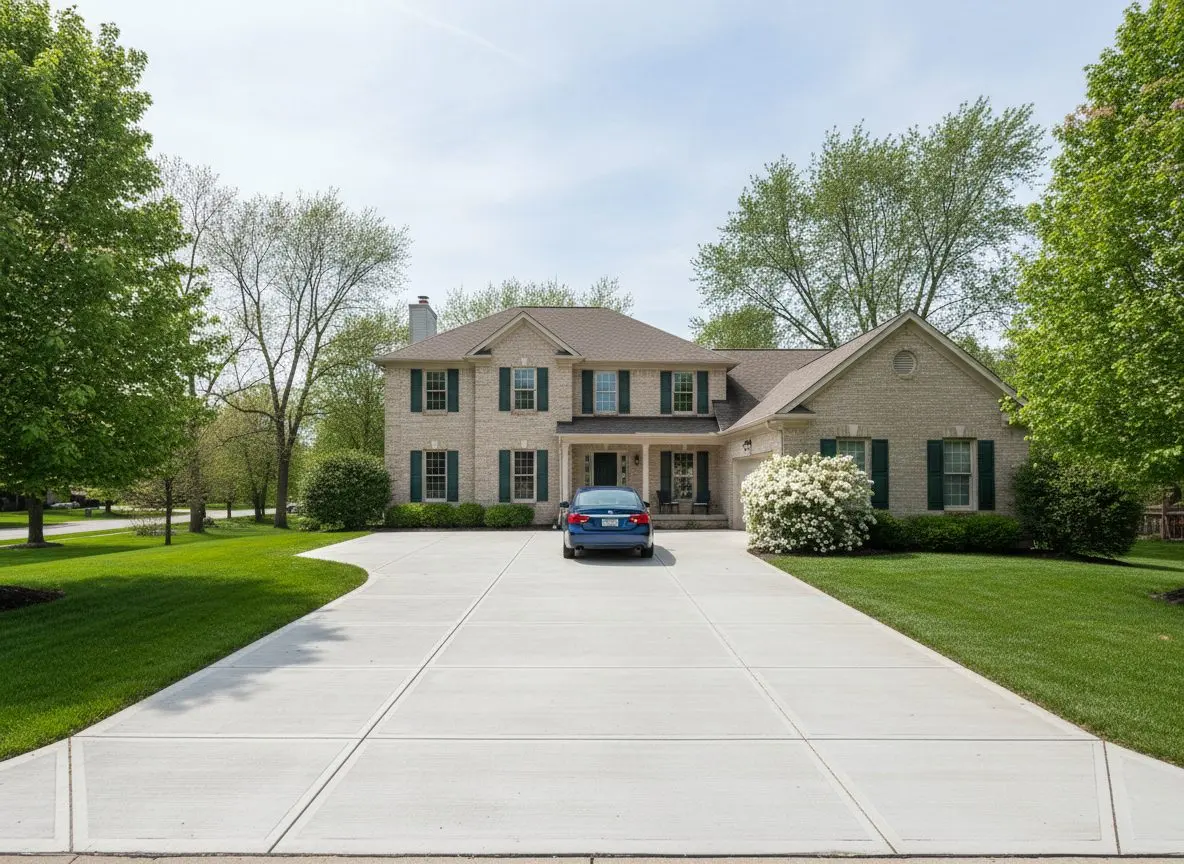
A driveway here is any slab built to carry a vehicle, from a single-car pad to a wide parking apron for a work truck and trailer, including RV pads and driveway extensions poured alongside an existing one.
If the slab in question is settling or already cracked rather than new, that is Concrete Repair, one page over, where resurfacing and full replacement get weighed against each other.
Driveways and parking pads make up most of what this crew pours, several dozen a year across Bloomington and Normal for going on two decades.
Most calls are for a replacement pour on a driveway that has heaved or cracked at the joints, followed by new construction for a garage addition or a wider apron. RV pads come up often enough each summer to count on their own, usually a longer slab than a car needs.
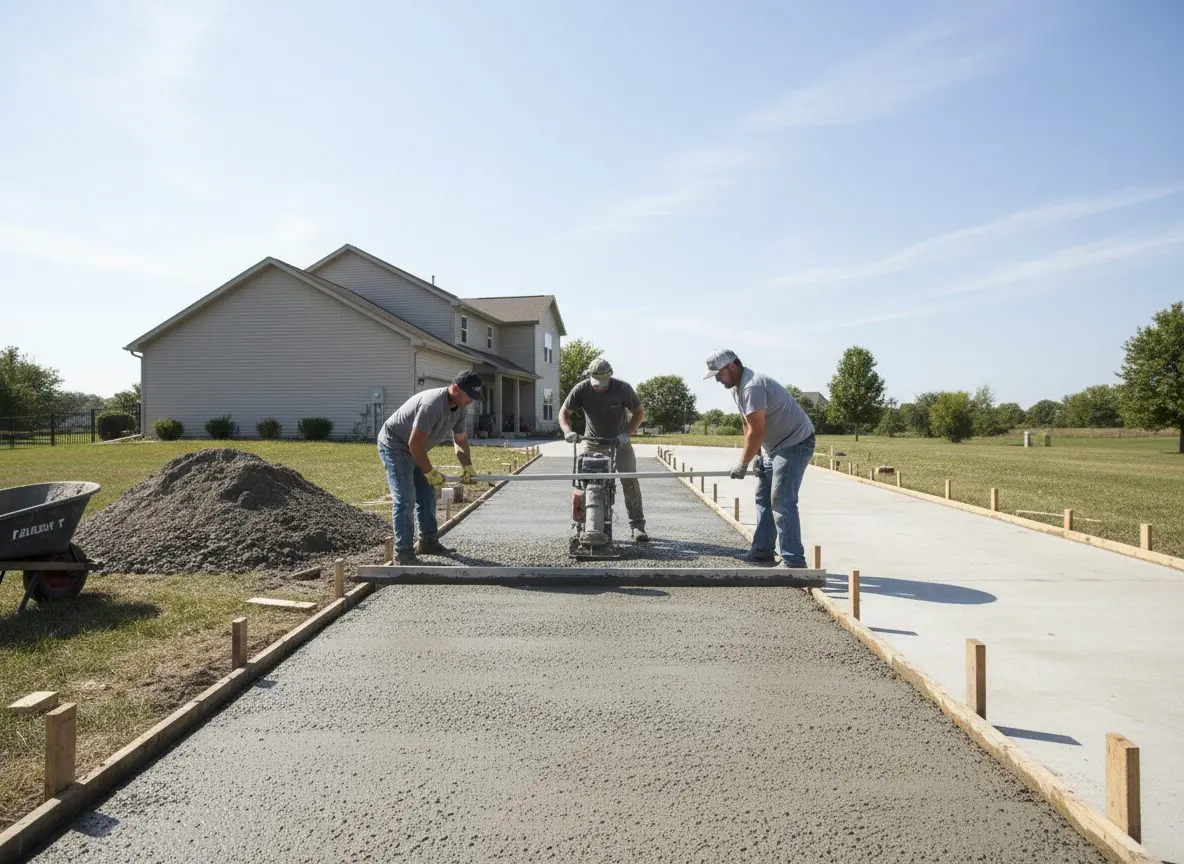
Every driveway goes down at four inches minimum over a compacted base, thicker where trucks or trailers are expected, because a base that has not been compacted properly is what lets clay heave a slab out of level.
A homeowner whose driveway has heaved into a trip hazard calls about a replacement pour, and a contractor framing a new garage calls about the apron before the drive goes in.
Call (309) 555-0142 for a free estimate on a new driveway. You will stop steering around the cracked corner and get a slab that holds its line through the next freeze!
What's covered in a driveway pour
One crew handles the excavation, the forming and the finish, so nothing gets handed off between trades.
- New driveway pours, any size
- Driveway replacement after heaving or cracking
- Garage aprons and approach slabs
- RV and boat parking pads
- Driveway extensions and widening
- Old driveway removal and haul-off
- Reinforcement sized to the vehicle load
Resurfacing or a full repour, which your driveway needs
A cracked driveway does not always mean the whole slab has to come out.
Surface cracking with no real height difference at the joints and a base that has not moved usually means the slab itself is sound. An overlay or resurfacing pass fixes the look and buys years without the cost of demolition.
A driveway with sections sitting higher or lower than their neighbors, or cracks running through the slab rather than along a joint, means the base underneath has failed. Resurfacing over that just hides a subgrade problem that keeps moving.
We will tell you which one your driveway needs on the visit, including when resurfacing is the right call and the cheaper one, rather than pushing you toward the bigger job.
What holds up under a loaded driveway
The base is compacted to spec before the truck is called, and the mix strength is chosen for what will park on it.
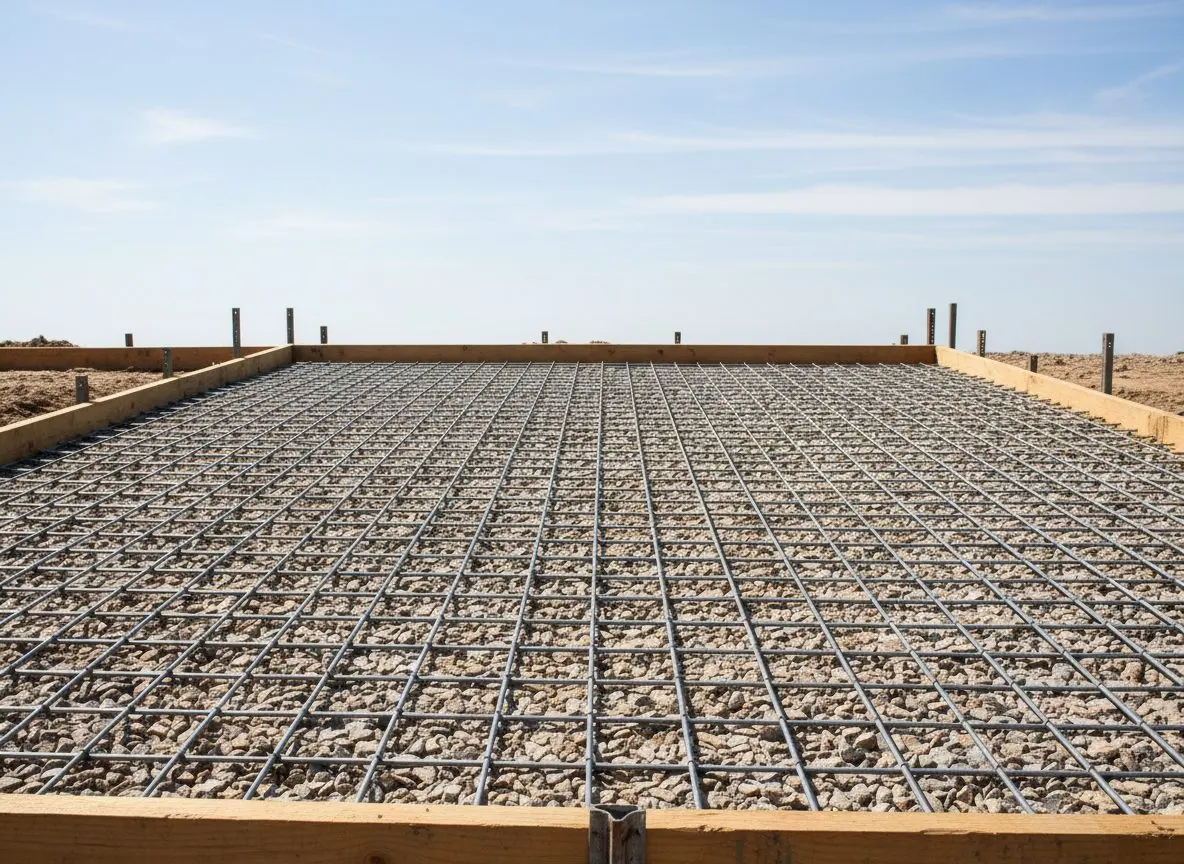
A driveway rated for daily vehicles goes down at four inches minimum over a base compacted in lifts, not just graded and left loose. Anything carrying a truck, trailer or dumpster gets a 4,000 PSI mix and either rebar or wire mesh set in place rather than fiber alone mixed through the concrete.
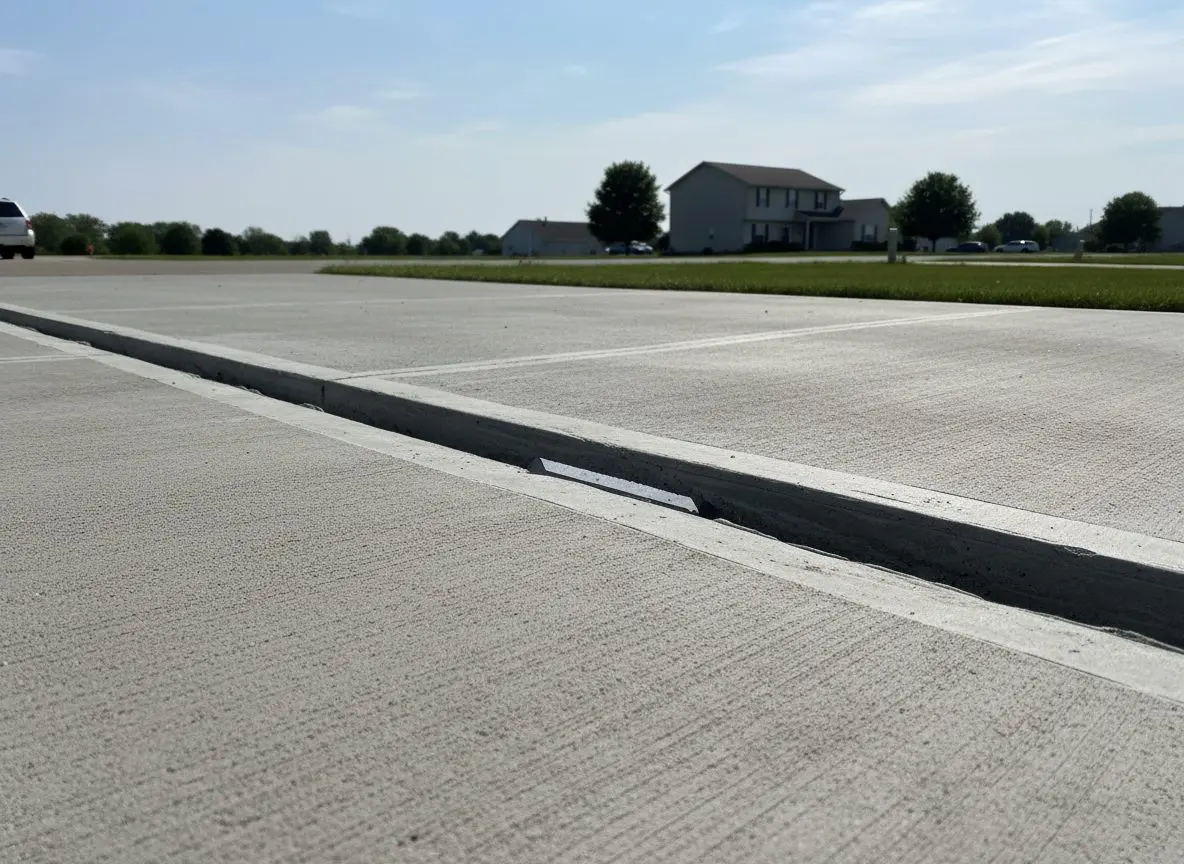
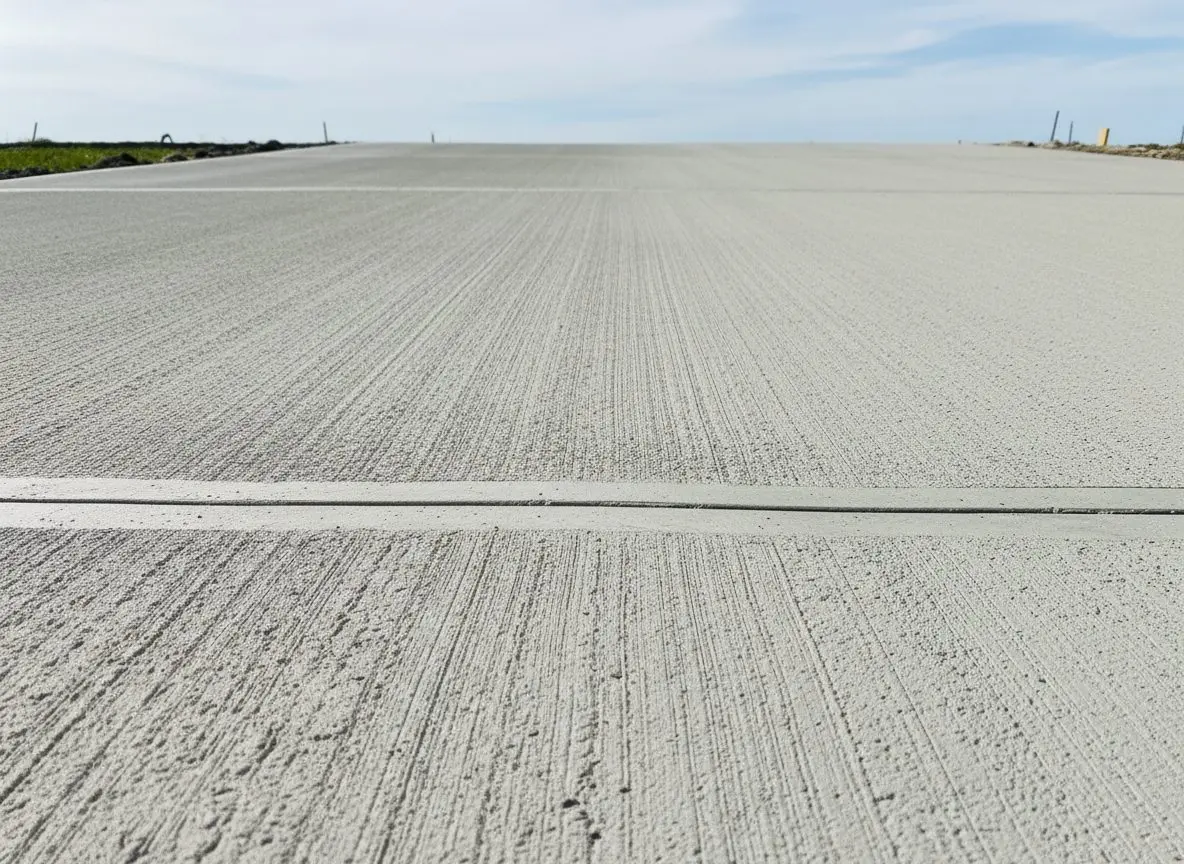
Control joints are cut within twenty-four hours of the pour, spaced at roughly four times the slab's thickness, so the concrete cracks where the joint tells it to rather than wherever a freeze finds a weak point. Where the drive meets the garage floor or the street apron, an isolation joint lets each slab move on its own instead of pulling its neighbor apart.
- 4 inches minimum, thicker under trucks
- 4,000 PSI mix for vehicle loads
- Base compacted in lifts, not graded and left
- Rebar or wire mesh under heavy loads
- Control joints cut within 24 hours
- Isolation joints at the garage and street
Call for a same-day callback and we will measure the base and the load before anything gets quoted.
(309) 555-0142Why do two driveways the same size price differently?
You have just seen how a driveway pour runs. What sets the price is what the base needs and what the slab has to carry, not the square footage on its own.
- Slab thickness for the load
- A driveway built for a car and a driveway built for a work truck and trailer are not the same pour, and the difference in thickness and mix strength shows up in the material bill before anything else does.
- Depth of base rebuild
- A base that tests firm gets compacted and poured over the same day, but soft clay under an old driveway has to be dug out and rebuilt with fresh gravel first, work that is often invisible until digging starts.
- Steel versus fiber reinforcement
- Fiber mixed through the concrete is fine for a light pad, but a driveway rated for trucks gets rebar or wire mesh set by hand, which takes real time and adds to the pour.
- Apron and approach shape
- A plain rectangle forms and pours in a day. An apron with a curved approach, steps down to the street or a border against the garage needs more forming and more cutting for the same square footage.
- Removing an old driveway
- A replacement pour over a heaved or cracked driveway needs the old slab broken out and hauled off before anything new goes down, and that demolition is priced separately from the pour itself.
- How close the truck can get
- A driveway the mixer can back straight up to pours in one clean run. A tight lot or a drive blocked by a fence means concrete gets wheeled in by hand, which adds hours nobody sees once the slab is finished.
Which of these apply is usually clear once somebody has stood on the driveway and seen the ground for themselves. Get a free quote
From the first call to a slab you can use
Most jobs run one to two weeks from that first call to a finished pour, and the pour itself takes just one day.
Call (309) 555-0142 for a free estimate, or ask us to come out and measure before you decide on anything.
Get a free quoteWhat a solid driveway is worth when you sell
A cracked or heaved driveway is one of the first things a buyer's inspector writes up.
No remodeling report we could find prices a concrete driveway on its own the way it prices a kitchen or a bath, because national cost value studies track whole rooms a buyer shops for, not the pour under a home's curb appeal.
What is well documented, and what an inspector will tell a buyer directly, is that a heaved or spalling driveway reads as deferred maintenance even when the house itself is sound, and a buyer negotiating off a bad inspection is negotiating against the whole sale price, not just a slab. A driveway poured on a proper base and free of joint cracking removes that line from the conversation, which a national percentage was never going to tell you anyway.
What Bloomington clay does to a driveway base
Corn belt clay swells wet and shrinks dry under a driveway before the pour window even closes, and road salt keeps working on the surface long after the concrete has cured.
- Clay subgrade that has not been dug out
- Most lots around Bloomington and Normal sit on heavy clay that swells wet and shrinks dry, and a driveway poured onto it without proper excavation and compaction heaves at the joints within a couple of winters, whatever the concrete is rated for.
- A pour window that closes fast in a cold snap
- Central Illinois gives concrete a real window to cure before the first freeze, and a slab poured too close to a cold snap can freeze before it reaches strength, leaving a driveway that scales and flakes at the surface the following spring.
- Road salt eating at the surface
- A McLean County driveway gets de-iced through most of the winter, and salt brine driven onto a slab with no air entrainment in the mix pits and flakes the surface within a few seasons, well before the base underneath has done anything wrong.
Recent driveways poured around McLean County
Real driveways poured for real customers across Bloomington, Normal and the towns around them, with what each one needed.
-
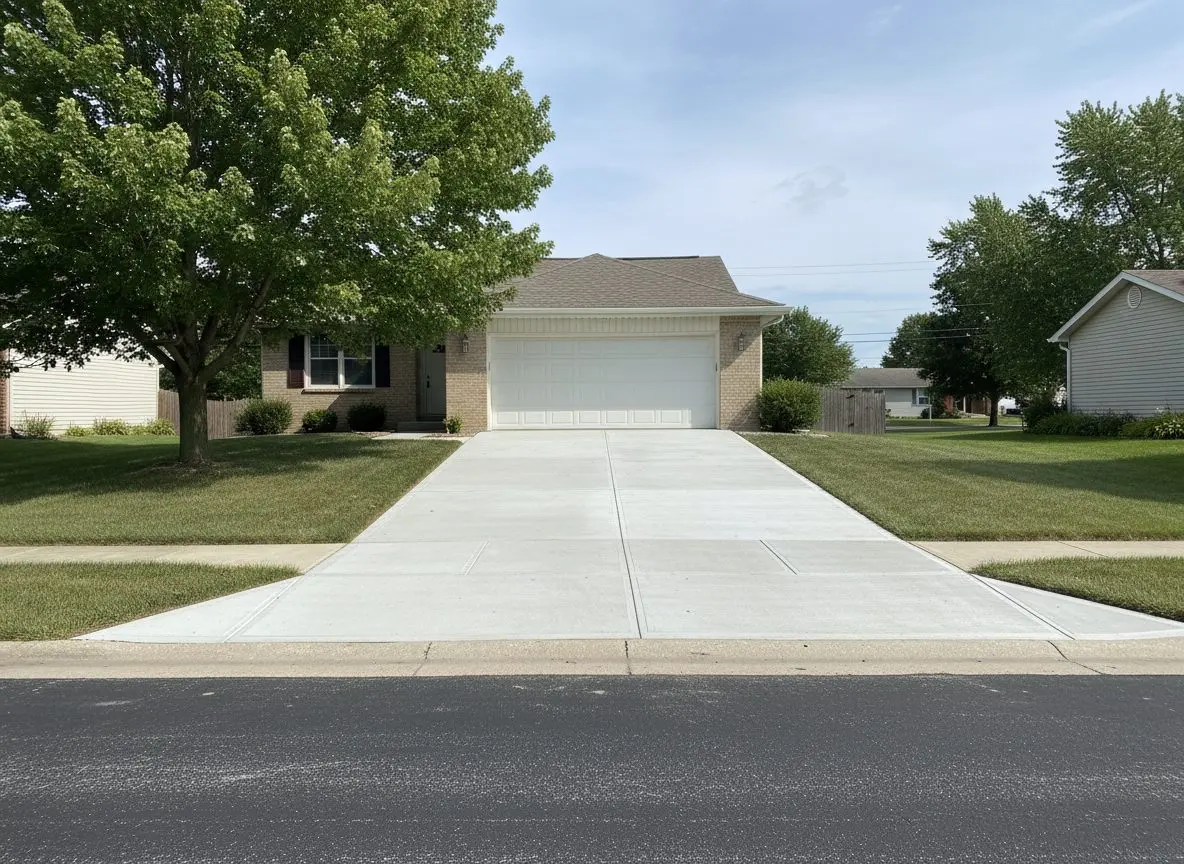
Two-Car Driveway Replacement
Bloomington
A heaved driveway pulled out to the base, which tested soft under one corner and had to be rebuilt before the new slab went in.
-
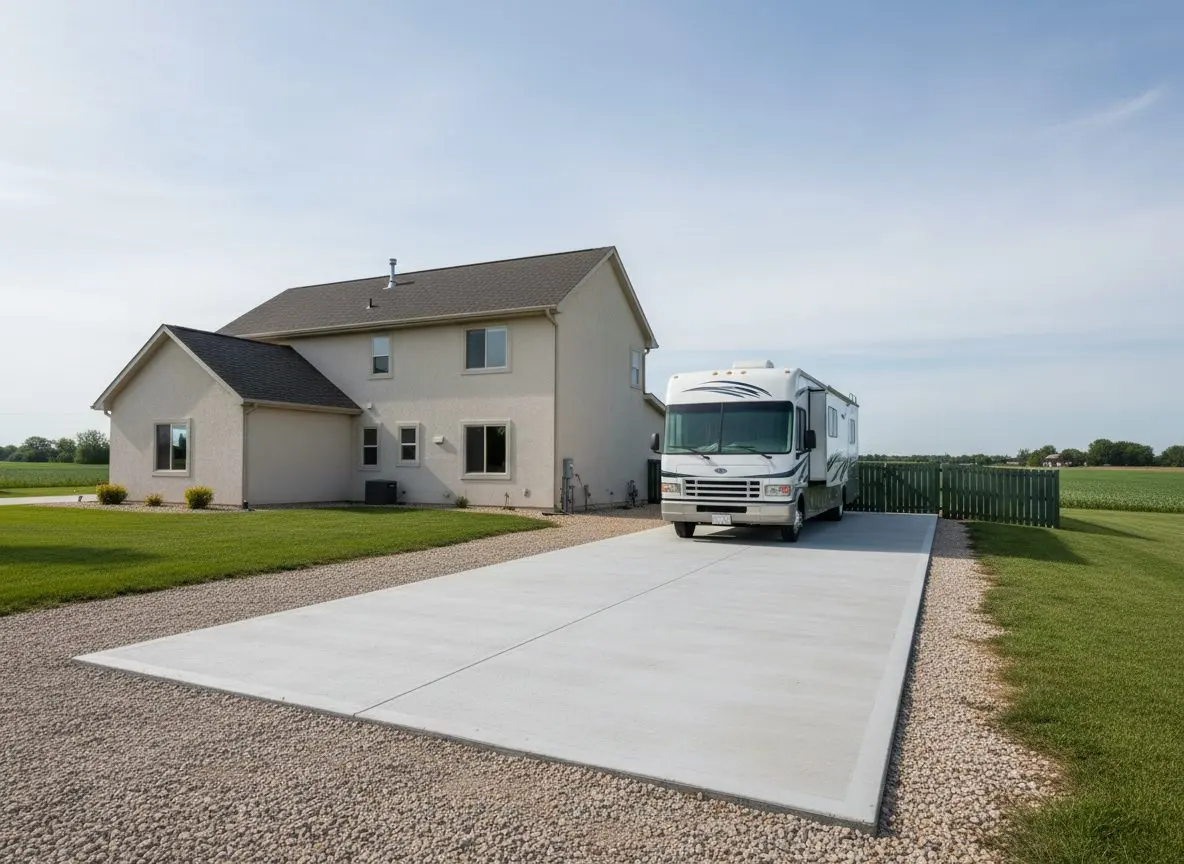
RV Pad Addition
Normal
A dedicated pad poured beside an existing driveway, six inches thick with wire mesh set for the weight of a Class A motorhome.
-
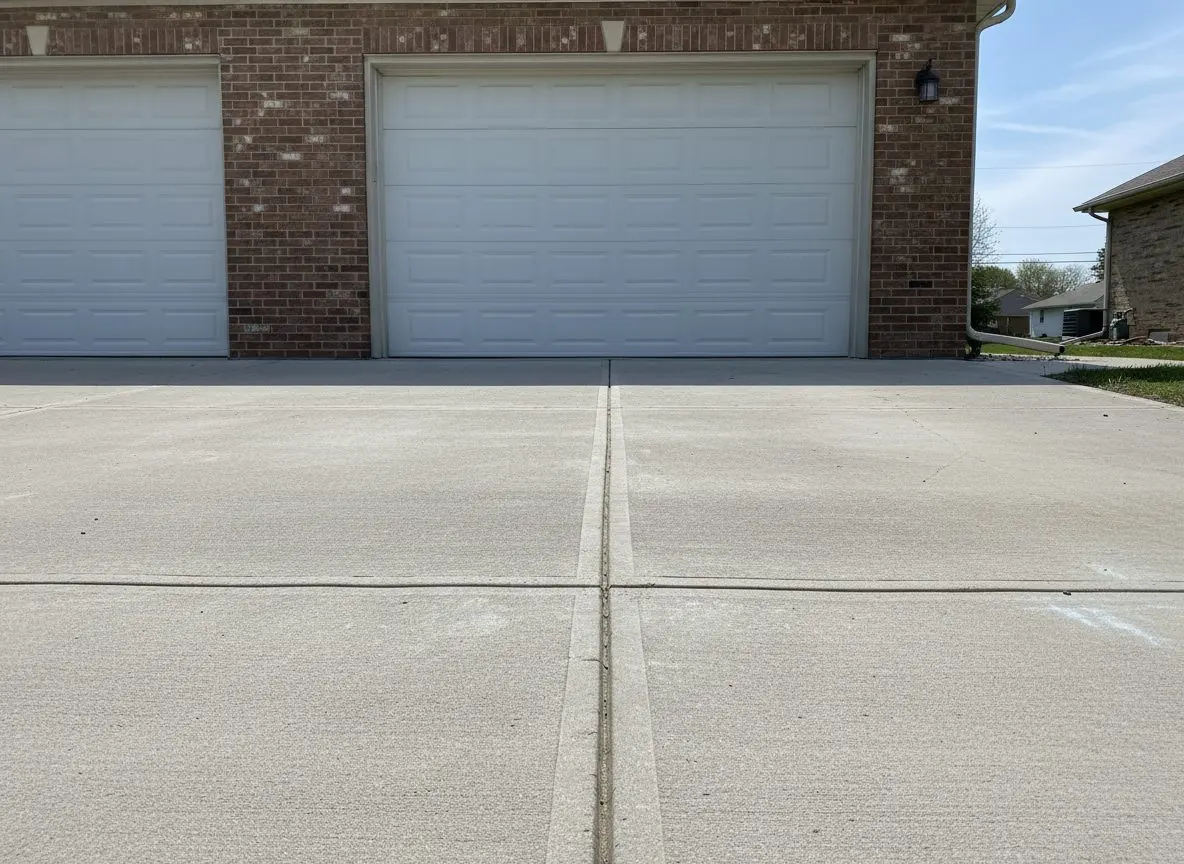
Garage Apron Repour
Hudson
The apron in front of a new detached garage, tied into the existing driveway with a dowelled joint so both slabs move together.
-
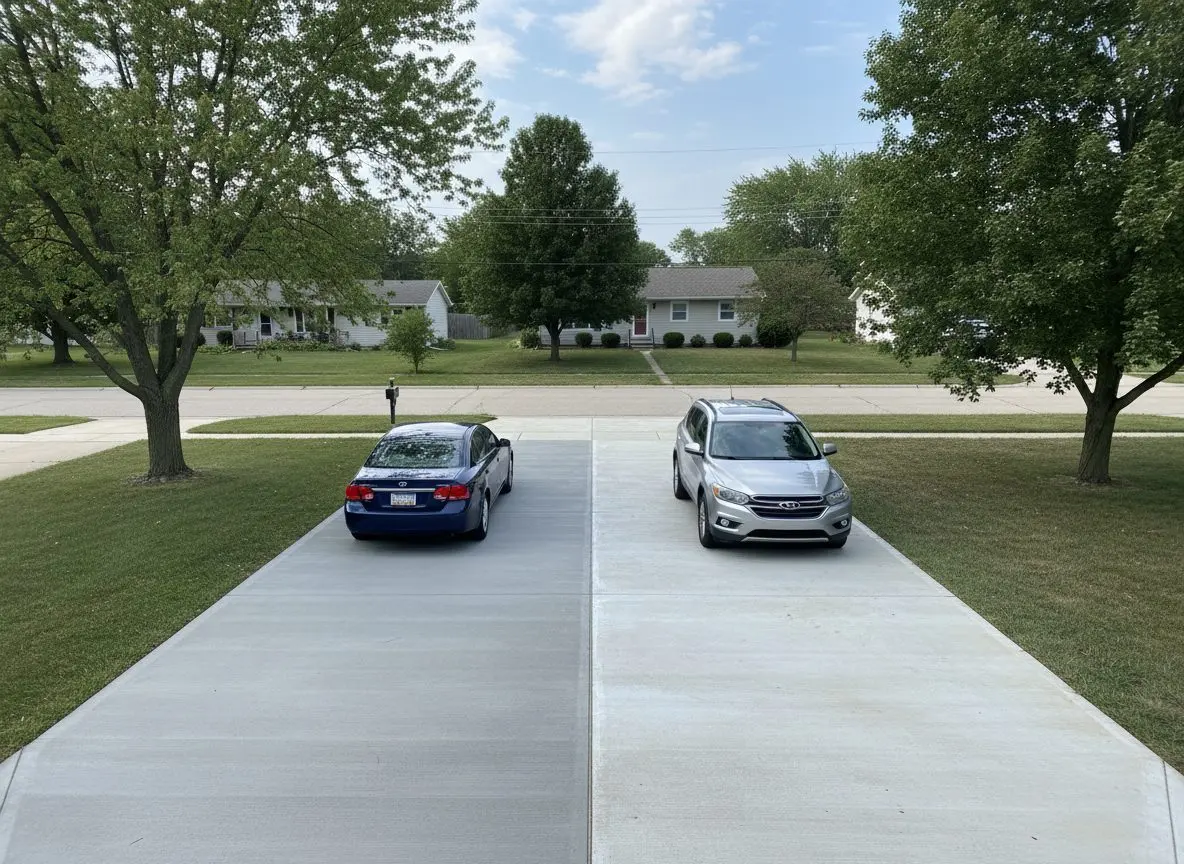
Widened Parking Pad
LeRoy
A single-car driveway widened to fit a second vehicle, matched to the existing slab's finish and control joint spacing.
-
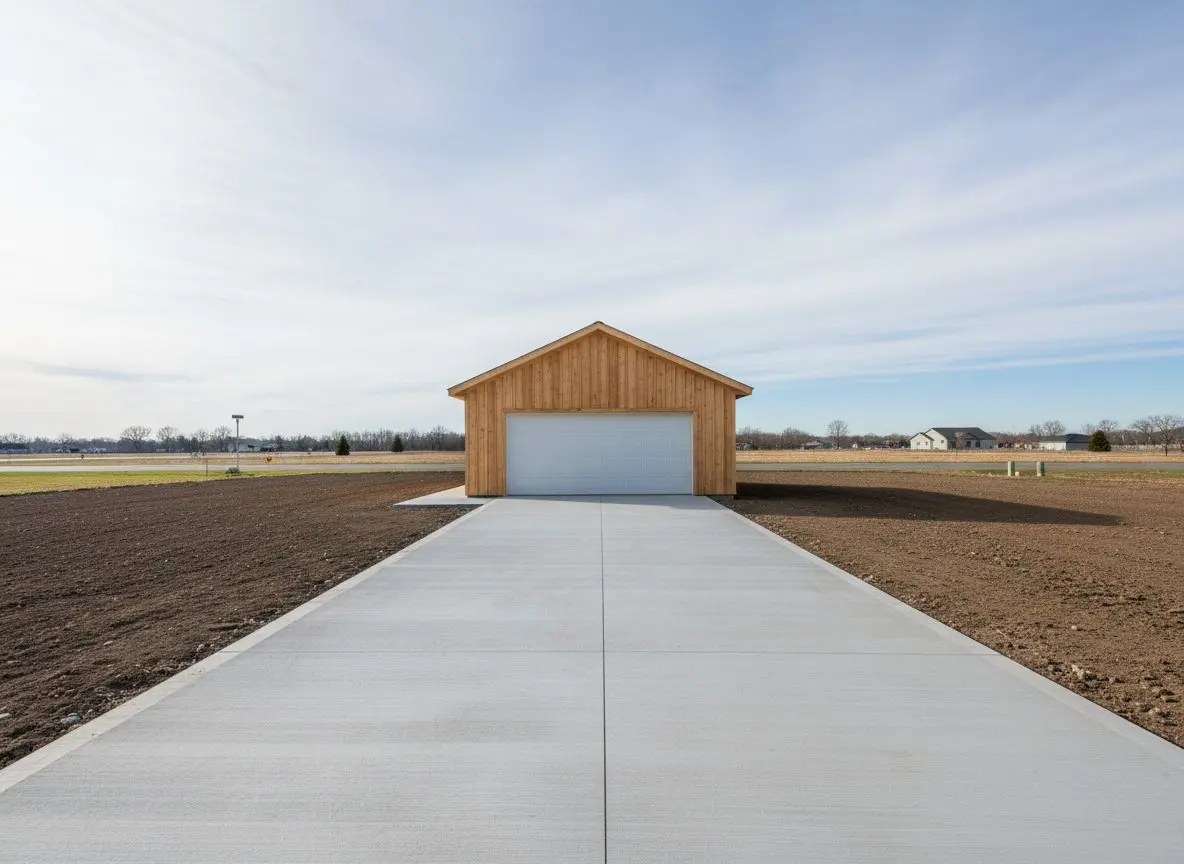
New Driveway for a Garage Build
Downs
A fresh driveway poured ahead of a new attached garage, sized and reinforced to match the framing crew's schedule.
-
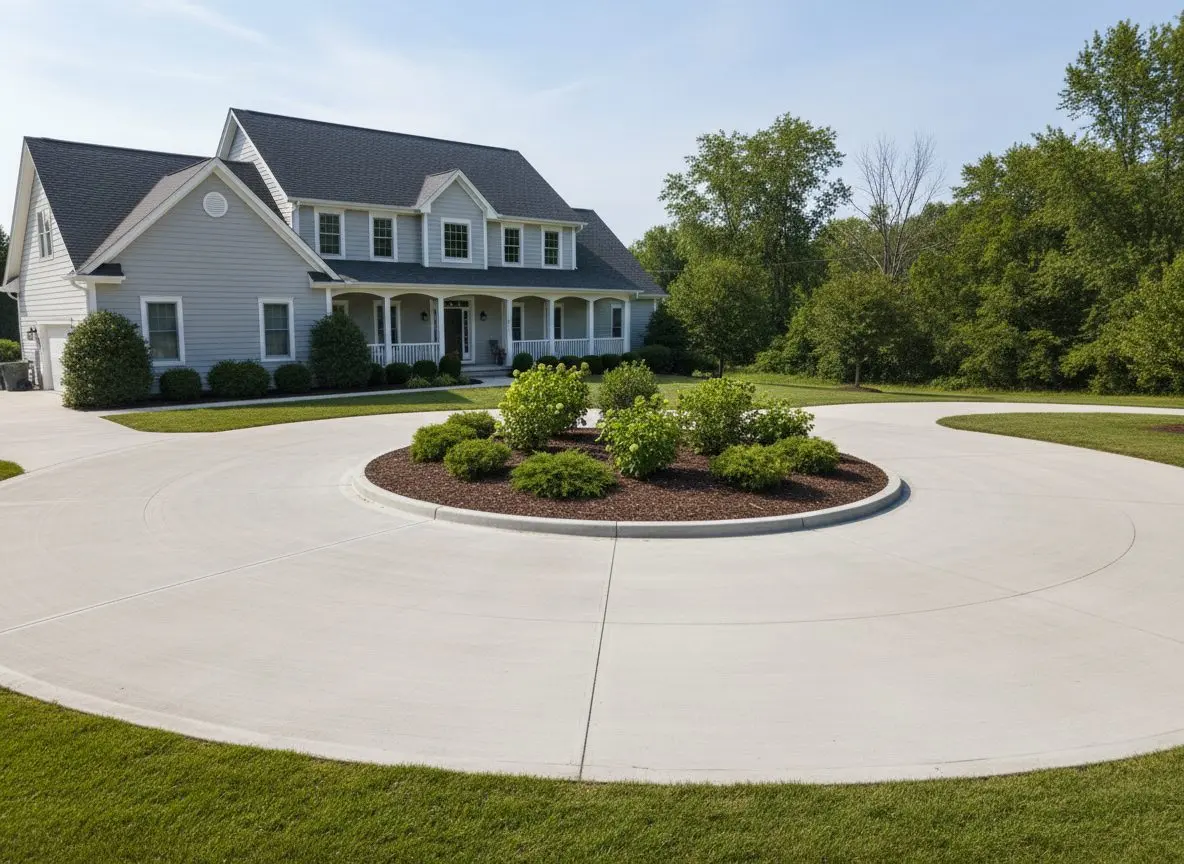
Circular Driveway Approach
Danvers
A curved approach off the road tied into a straight run to the garage, more forming than a rectangle but poured in the same visit.
What drivers around Bloomington say about their new driveway
-
Rated 5 out of 5
City tagged the two sidewalk squares in front of our house back in June. They cut them out and repoured on a Tuesday morning. Nothing else to say about it.
Doug H. Towanda Concrete Repair -
Rated 5 out of 5
Our driveway lifted at the apron every winter until it cracked right across. When they broke it out they hit an old asphalt layer nobody knew about, which added a day. Flat through two winters now.
Renee B. Carlock Driveways and Parking -
Rated 5 out of 5
We left the patio too late and October was closing in, so they poured on the first dry week and said the sealer would wait until spring. It did. My husband still checks the slope when it rains.
Terry S. Downs Patios and Walkways
Ask where we poured near you and go and stand on it. That tells you more than a star rating does.
Get a free quoteFAQs
Frequently asked questions
Driveway questions from around Bloomington and Normal
Will you pour a driveway that isn't a plain rectangle?
Yes. An L-shape around a garage, a curved approach or a border against the house all pour fine, they just need more forming and more cutting than a straight run, which is reflected in the quote rather than turned away.
Does a new driveway quote include removing the old one?
It can, and it is priced as its own line rather than folded into the pour. Breaking out and hauling off an old slab is a separate job from placing a new one, and we price both together on the same estimate visit.
How soon can I drive on a new driveway?
Foot traffic is fine within a couple of days, and light vehicle traffic is usually safe around a week in. Full strength for regular use takes closer to a month, and we will tell you the actual date for your pour before we leave.
How long does a driveway take to cure fully?
Concrete reaches most of its strength in about a week under cover, but it keeps hardening for close to a month. We will tell you when it is safe for cars and when it is ready for a trailer or anything heavier.
Is extending a driveway worth it instead of a new pour?
Often, if the existing slab is sound and level. We tie a new section into it with a dowelled joint so both slabs move together rather than pulling apart, which costs less than replacing the whole driveway.
Does a two-car driveway cost much more than a single-car pad?
The extra width adds material and forming, but not in a straight line with the square footage, since the excavation and base work for the wider slab mostly happen in the same visit as the narrower one would need anyway regardless of width.
How much of the driveway gets blocked off during the pour?
The area being poured is fenced off with the forms already in, and the truck needs enough room at the curb or in the drive to reach them. Most residential pours use the driveway itself and do not need to close the street.
Can I still park a car while a new driveway cures?
Not on the new slab itself until it has cured enough to take the weight, usually about a week. We will tell you where to park a car in the meantime and exactly when the new driveway is ready to take the weight back on it, in writing.
What's the difference between broom and exposed finishes?
A broom finish drags a stiff broom across the wet surface for grip and is one pass. Exposed aggregate washes the top layer off to expose the stone underneath, which needs a second visit to seal properly and costs more to place well.
What if the mixer truck can't reach where the driveway goes?
The concrete gets wheeled in by hand from wherever the truck can park closest, which adds labor but does not stop the pour. We check access on the estimate visit so it is priced in rather than a surprise on pour day itself.
Do you need the old driveway measured before you can quote it?
A phone description gets you a rough figure, but the real quote comes after somebody has stood on the site, checked the ground and measured the existing slab, because the condition of the base is what actually sets the final price.
What happens if a new driveway cracks after it's poured?
A hairline crack at a control joint is the concrete doing what the joint was cut for and is not a defect. A crack running through the slab away from a joint on a driveway we poured gets looked at and dealt with under our workmanship cover.
Bloomington Concrete Pros
We have been pouring concrete around Bloomington and Normal since 2008.
Bloomington Concrete Pros pours driveways, patios, slabs and foundations across Bloomington, Normal and the rest of McLean County. We handle new pours, removal and replacement of failed slabs, and repair on concrete that is cracking or settling with the freeze and thaw. Every job gets a free estimate before anything is scheduled.
Why call a crew that already knows this ground?
- 18 years pouring concrete in Bloomington and Normal
- Free estimate before any work is scheduled
- You get a callback the same day, every time
- General liability and workers compensation cover
- We work around the pour window, not against it
Concrete poured without allowing for how this ground moves cracks at the joints by the first winter, and a slab poured on a rushed schedule rarely cures the way it should. We plan around both, from the mix we choose to the week we book the pour. Call (309) 555-0142 for a free estimate, and we will come out and measure before you decide on anything.
Give us a call
office@bloomingtonconcretepros.com
Send us a message
315 E Front St, Bloomington, IL, 61701
Where to find us